People Who Dont Feel Comfortable in an Art Museum
September 11, 2001, was a Tuesday. Past that weekend, many of New York City's museums had reopened, gratis to the public. I recollect seeing the faces of the visitors and how communing inside the museum gave them a sense of comfort and security, of life eventually recapturing its familiar rhythm.
Now, equally a calamity of a different sort is ravaging our world, it is no less urgent that museums reopen as soon (and every bit safely) equally possible. Switching to providing content online is boot the tin can downwards the route. For all its educational and entertainment value, digital engagement, as many of us are finding, is a poor substitute for the uniquely analog and interpersonal experience of visiting a museum.
Although running a museum with diminished attendance and added prophylactic precautions is costly, and the decisions involved are hard, a core mission imperative is to serve the public. Advocates have long claimed that museums are essential to a operation society. If that merits has whatever merit, then museums need to demonstrate it in real fourth dimension—by being at the front of the line in rebooting activity.
Most of our museums take ample space to welcome visitors while allowing them to maintain concrete altitude. Open museums would mean not simply the resumption of employment and earned revenues, but as well, and more chiefly, a host of intangible benefits, and I don't just mean meaning, transporting, meditative encounters with art. Museums provide a haven in a time of trauma and disruption. Equally Kerry J. Sulkowicz, the president-elect of the American Psychoanalytic Association, notes, "we're in the midst of two outbreaks: a pandemic of the virus, and a pandemic of feet."
Museums could offer people who have experienced weeks of isolation a safe identify to go, or a reprieve from cramped quarters. Their opening would signal the beginnings of a render to normalcy. What's more than, in one case the public is dorsum, museums can serve as hubs of education, information-sharing, and collective reflection as we work together to surmount this crisis.
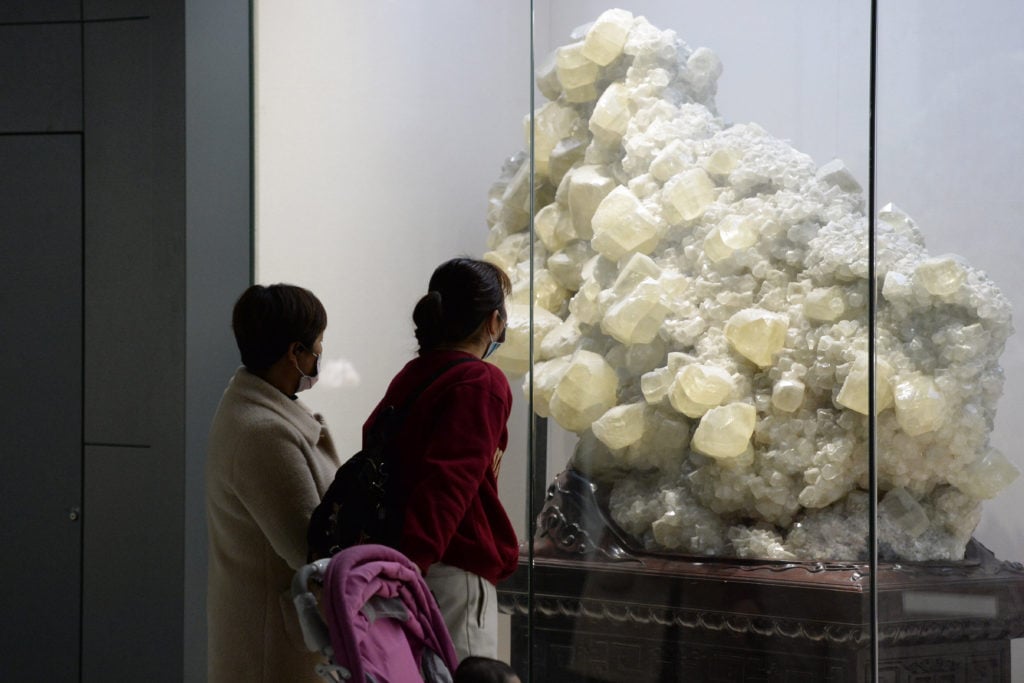
The Anhui Geological Museum in Hefei, China, which reopened on March 27 to visitors with reservations. The museum limited omnipresence to fewer than 1,000 visitors per twenty-four hours. (Xinhua/Huang Bohan via Getty Images)
Getting Back
Opening up is doable. Which is not to say it will be comfortable. Nonetheless, a few practical measures could permit institutions to commencement to receive visitors, every bit soon every bit local governments lift restrictions. These could exist rolled out, so relaxed gradually, every bit appropriate. I have discussed these steps with arts leaders. None has felt they were unreasonable, although there are logistical and regulatory hurdles to clear. Versions of them are already existence assessed in many institutions. Museums in Asia and Europe will before long offer working models, and perhaps some cautionary tales. It will exist crucial to share experiences and compare notes as we feel our way forward.
- Devise a timed-entry organization in which visitors arrive on the quarter-60 minutes, for example, in limited numbers. As a condition of buying a ticket, ask almost active symptoms. Consider adopting the practice of temperature-taking at the door. Plant a waiting area for people to stand in line at advisable distances. If a burger joint can hand out an electronic device to warning customers when their food is gear up, so can museums.
- Take special precautions to protect the about vulnerable. Dedicated entrances or opening hours may be helpful. When testing is in place, admit anyone who is confirmed to have antibodies. It is highly unlikely that older and immunocompromised people would be tempted to visit museums in large numbers at this moment. Meanwhile, museums tin can step in for the absence of school. As the father of a teenager, I know first-mitt what an ballsy vacuum this situation has left for kids.
- Lean more on younger staff, especially for public-facing roles. There are many in most museums, and some will soon exist tested for antibodies. Here as elsewhere, the younger finish of the workforce, equipped with the necessary protective gear of course, can assistance gild proceed going while it's withal risky for more vulnerable colleagues to prove up. Emergency regulations should enable institutions to make such distinctions without exposing them to charges of ageism.
- Make face masks obligatory, and available.
- Enforce indoor distancing etiquette. Attendants in galleries and common areas can gently remind visitors to keep a distance from one another, just every bit they remind children not to touch the art. I accept been impressed by how carefully people are observing distancing rules in bakeries and grocery stores. Is there whatever incertitude they tin practise the same in a museum?
- In add-on to having hand sanitizer all over the identify, if public-wellness experts suggest it, install some kind of full-torso disinfecting station at entry points. Not to be glib, just one could imagine such a facility resembling one of our popular immersive art experiences. Surely we can come up with something acceptable, humane, and even absurd. Let'due south challenge our best artists to brand information technology happen. It's OK to have a sense of humor.
Inevitably, there volition exist diverging views on how such policies could exist implemented, and exactly when. The situation will be dissimilar for highly frequented museums in urban areas than for institutions in suburban or rural locations where parking is abundant and visitation, moderate. Permit's be honest: Many museums are not exactly inundated on most days, even in the best of times.
Once We're Back
A larger set up of questions looms about what happens when museums exercise reopen. Crises like the current one practise not so much create new weather condition as they accelerate innovations already underway. We have seen this in the rapid expansion of digital content and in the remarkable migration to telecommuting. Will all these changes stick? Unlikely. Will some remain permanent fixtures in our future? Almost definitely.
For museums, the recovery from the pandemic is likely to force three major reckonings. Get-go, a business model relying on temporary blockbuster exhibitions involving international loans (and sizable carbon footprints) is probable to recede. Every museum director I know is doing triage on their exhibition calendars and striking off the large-ticket items. With the toll of freight, courier transport, and insurance predicted to rising, big traveling shows will become a luxury, at to the lowest degree for a while. What comes in their stead? Clever storytelling around the permanent collection and attainably priced exhibitions on timely topics that attract a wide audition.
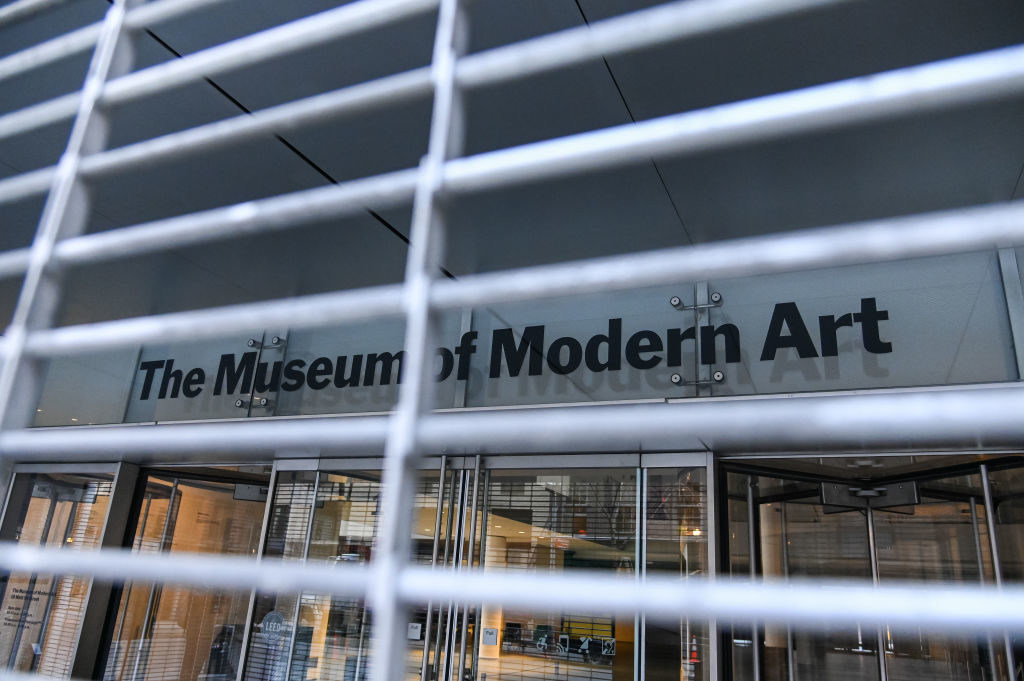
The Museum of Modern Art closed on March 12 due to the spread of coronavirus. (Photo: Ben Gabbe/Getty Images.)
Second, expect painful adjustments to how museums are run—the first wave of which has already begun. Several sacred cows are headed to the slaughterhouse. One is the commitment to full-time staff. Like after the 2008 financial crisis, cash-strapped museums may be forced to shift more heavily to part-fourth dimension and outsourced work. Some gimmicky-art Kunsthalles already rely principally on independent curators hired on a freelance basis. In larger museums with permanent collections, the financial challenges volition provide a new impetus for merging the "silos" of specialized departments. A deep and persistent crisis may fifty-fifty reverse the field's endemic aversion to closures and mergers.
Third, and on a more positive notation, the crisis volition put wind in the sails of a new museology in which service to the customs is every bit important every bit the stewardship of objects. The heady edges of innovation in museums these days already involve public engagement, instruction, and creative storytelling. Government bailouts and emergency funds from foundations will be contingent on service to the customs. The silver lining of this crisis may exist a more than rapid descent from the "temple on the hill" model of the art museum, which dispenses knowledge and prestige to the well-heeled and well-behaved, to a more than egalitarian, more open-ended, and more participatory institution that tin can engage society in its full contemporaneity and diversity.
Anyone who has read this far is likely to intendance plenty about museums to know that, in the end, what they offer to people is a sense of discovery and transcendence, continuity and belonging. Rarely take we needed these things more than than at present. Every bit museums heart the futurity beyond the pandemic, they tin can seize an opportunity to stay true to their essential values. We will all be the amend for it.
András Szántó, Ph.D., a sociologist and founder of Andras Szanto LLC, is a strategic advisor to museums, educational institutions, and corporations agile in the arts. This article builds on before posts on Instagram and LinkedIn.
Follow Artnet News on Facebook:
Want to stay ahead of the art world? Subscribe to our newsletter to go the breaking news, eye-opening interviews, and incisive critical takes that drive the conversation forward.
Source: https://news.artnet.com/opinion/andras-szanto-op-ed-reopening-museums-1832439
0 Response to "People Who Dont Feel Comfortable in an Art Museum"
Post a Comment